MEDIA RELEASE
KHULISA AND EDF ADVANCE EVIDENCE-LED MODEL FOR COMMUNITY ENTERPRISE DEVELOPMENT IN NOUPOORT
Noupoort, Northern Cape – September 2026
FOR IMMEDIATE RELEASE
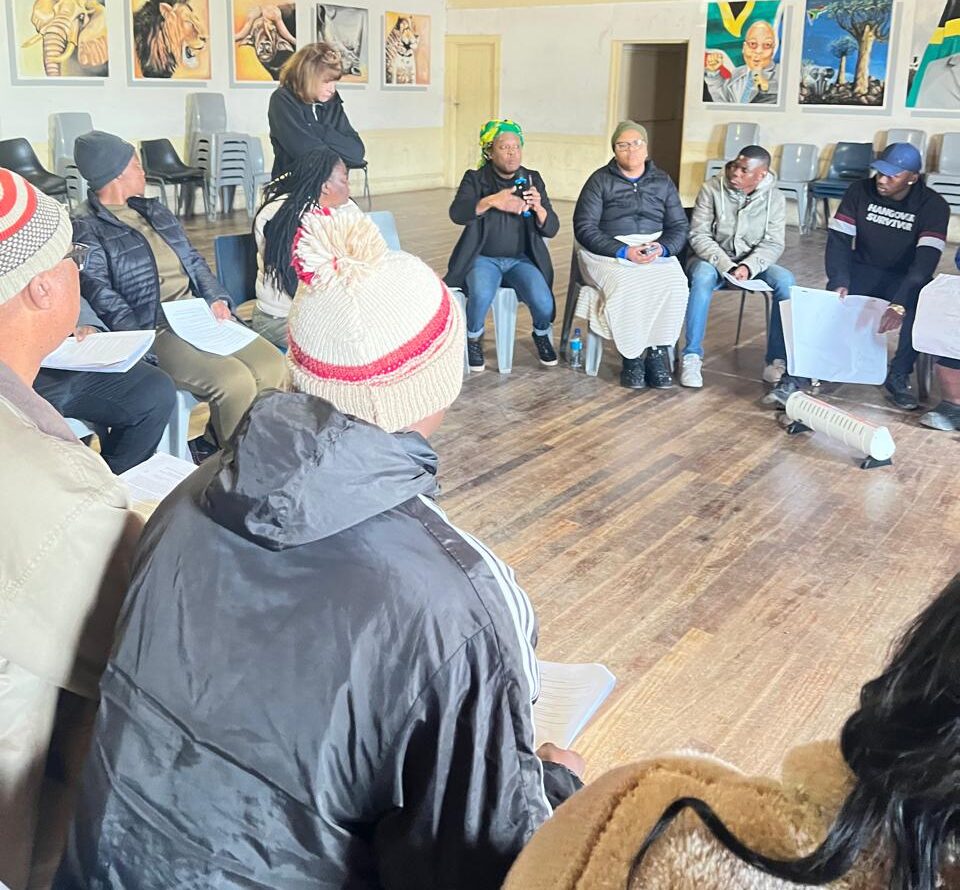
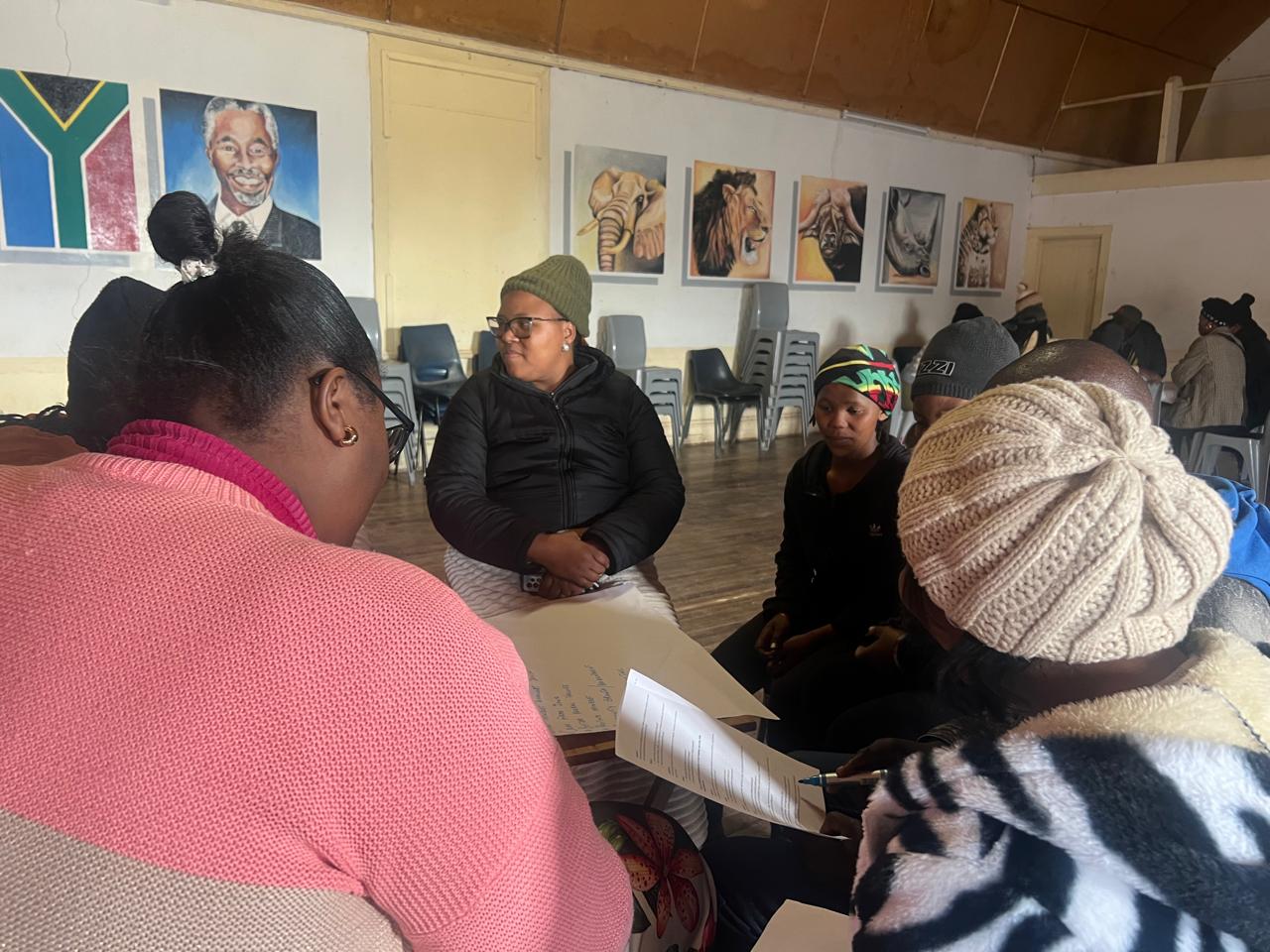
Khulisa Social Solutions is implementing an Enterprise and Strengthening Programme in Noupoort aimed at helping local community organisations become stronger, more sustainable and better positioned to create lasting social and economic opportunity.
The programme, developed in the context of EDF’s community development work in Noupoort, starts from a simple premise: sustainable development requires more than allocating funding. It requires understanding what is preventing progress, strengthening organisations first, testing whether proposed enterprises are viable, and only then determining what capital is genuinely required.
The initial assessment covers 12 community organisations in Noupoort and has identified 12 recurring systemic barriers to sustainable development. Nine of the 12 organisations have already identified potential enterprise opportunities, while three require further opportunity and market assessment before any enterprise investment can responsibly be considered.
The organisations are already reaching significant numbers of local residents. Aluta Development Network reports reaching approximately 120 people a month and 657 during the previous year, while Cosmos Sport Academy reports around 60 beneficiaries a month and approximately 1,000 over the preceding year. Natasha’s Community Development reaches approximately 150 to 200 people each month, Simanye Soup Kitchen approximately 150, and Azingce Day & Aftercare approximately 90 young children every month.
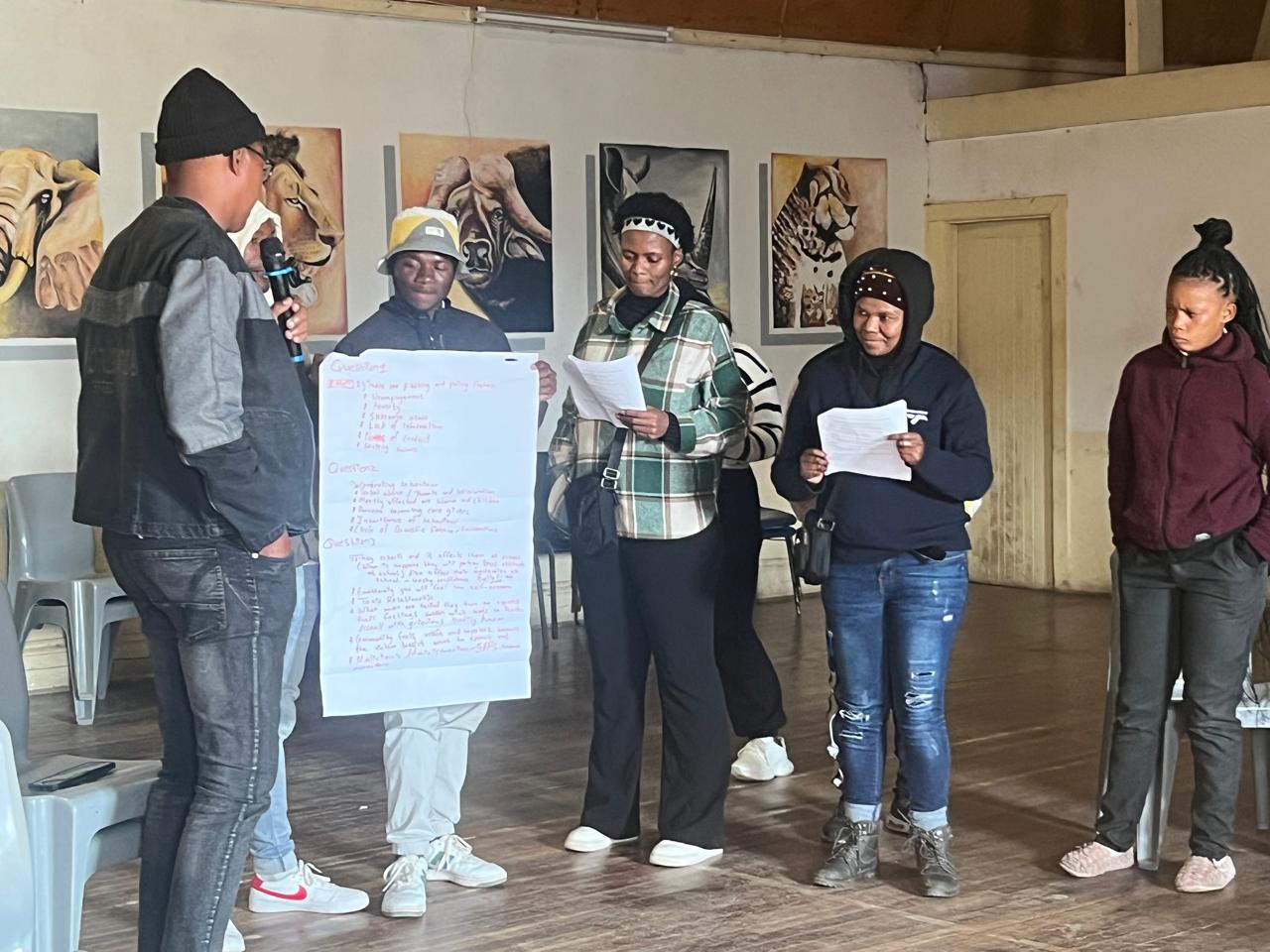
Despite the breadth of community activity already taking place, the baseline shows that the central challenge is not simply a shortage of money. Across the 12 organisations, the assessment identified recurring constraints including weak governance and compliance, inadequate financial systems, limited monitoring and evaluation, grant dependency, poor access to markets and capital, infrastructure constraints, unemployment and weak alignment between community organisations, government and business.
“Too often the first question in community development is how much money an organisation needs,” said Lesley-Ann van Selm, Founder and Managing Director of Khulisa Social Solutions. “We are asking a different question: what is preventing progress, what can capacity building resolve, and what capital is genuinely required once there is evidence that an opportunity can work?”
A number of potential community enterprises have emerged through the assessment process, including poultry farming, food production and catering, digital service centres, agriculture, branded-product printing and youth-led property maintenance. These opportunities originate from the organisations themselves, but they will not automatically receive investment. Each must first be tested for demand, costs, organisational capability, customers and commercial viability.
Under the programme’s structured nine-stage development model, capital is introduced only at stage six. Before reaching that point, an organisation must progress through baseline assessment, systemic blockage analysis, capacity building, funding readiness and enterprise feasibility. Capital investment is then followed by market validation, partnership development and evidence-based decisions on whether an initiative should be scaled, redesigned or stopped.
Khulisa’s role is therefore not to distribute funding. It is to strengthen governance, compliance, financial management, monitoring and evaluation, sustainability, enterprise development, market access, partnership development and accountability so that investment is directed towards organisations and opportunities capable of using it effectively.
This approach seeks to address one of the recurring weaknesses in community development: capital being committed before organisations, markets and implementation systems are ready to sustain it.
It also changes the way success is measured.
Rather than focusing primarily on how much funding has been allocated, the programme will measure whether organisations become more compliant, accountable and funding-ready; whether viable enterprises secure real customers and generate income; whether beneficiaries move into skills, work and income opportunities; whether productive capital generates measurable results; and whether partnerships develop around initiatives that have demonstrated their value.
The longer-term ambition is to build a stronger local development ecosystem in Noupoort in which community organisations are connected not only to funding, but also to markets, public institutions, private-sector partners and one another.
Where an organisation and its enterprise become genuinely investment-ready, an appropriate public-private partnership may then be developed around the proven opportunity. Community organisations bring local knowledge, trust, skills and implementation capability; the private sector and funders can bring capital, technical support and commercial networks; market partners provide customers and procurement opportunities; and the public sector can support regulatory alignment, infrastructure and services. Khulisa’s role is to help ensure that this partnership is built on evidence, capability and accountability.
“The partnership should come after the proof,” Van Selm said. “We want to help create credible, accountable and investment-ready propositions around which communities, business, government and funders can confidently align.”
The ultimate objective is to help move participating organisations from fragmented, vulnerable and grant-dependent structures towards stronger, evidence-driven and increasingly sustainable institutions that can continue delivering social value while also creating local economic opportunity.
The programme encapsulates this approach in one principle:
“Capital follows readiness. Readiness follows strengthening. Partnership follows proof.”

About us
Khulisa Social Solutions is a South African social cohesion and community development organisation founded in 1997. The organisation works nationally to strengthen vulnerable communities through restorative practices, NGO capacity-building, dialogue processes, youth development, psychosocial support, skills development, and collaborative ecosystem partnerships. Khulisa’s work focuses on addressing the systemic root causes of social dysfunction by building stronger relationships among communities, government, civil society, and the private sector.
For more information, contact:
Lesley Ann van Selm | Managing Director and Founder
Khulisa Social Solutions
082 601 2299