MEDIA RELEASE
Eastern Cape NGO Programme Shows Measurable Gains in Grassroots Capacity as Youth Unemployment Reaches 47.4%
Eastern Cape | 24 August 2026
FOR IMMEDIATE RELEASE
Against the backdrop of South Africa’s youth unemployment rate reaching 47.4%, a 12-month NGO capacity-strengthening initiative in the Eastern Cape has shown the potential of investing not only in community programmes, but in the organisations that deliver them.
Implemented by Khulisa Social Solutions, the initiative worked with 10 core community-based organisations across three Eastern Cape programme areas: Great Kei Local Municipality, the Grassridge beneficiary communities and Makana Local Municipality, including Makhanda. An additional community organisation participated in specialist grant-writing and programme-management training in Great Kei.
Significantly, each of the three programmes was funded by a different wind farm community trust, demonstrating how locally focused renewable-energy trusts can invest not only in individual community projects but also in strengthening the institutional capacity of the civil-society organisations that serve their beneficiary communities. The three programmes followed a common capacity-strengthening approach while responding to the specific needs and circumstances of the NGOs in each area.
The results are particularly relevant in the context of South Africa’s latest labour-market figures. Statistics South Africa reported this week that the official unemployment rate had risen to 33.6%, representing approximately 8.5 million unemployed South Africans. Youth unemployment remains considerably higher, highlighting the urgency of building stronger local systems that connect people to economic, educational and developmental opportunities.
The Eastern Cape programme shows that strengthening these local systems begins, in part, with strengthening the organisations already embedded in communities.
Across the Grassridge and Makana programmes, all seven participating NGOs demonstrated measurable improvements in governance and financial management. All seven also developed comprehensive monitoring and evaluation frameworks, while board functionality improved across every participating organisation. Five of the seven organisations, or approximately 71%, secured new funding during the programme period. In the Grassridge programme, two of the three participating NGOs secured new funding (67%), while in Makana, three of the four organisations secured new funding (75%). Participant satisfaction averaged 4.33 out of 5 in Grassridge (86.6%) and 4.75 out of 5 in Makana (95%).
In Great Kei, all three core participating organisations completed the full organisational development pathway, achieving a 100% completion rate. Participant satisfaction averaged 4.67 out of 5, equivalent to 93.4%. An additional organisation also participated in the final grant-writing and programme-management training.
These figures matter because the organisations involved are responding directly to some of the challenges reflected in South Africa’s national statistics. Their work includes support for youth employment and work-readiness, disability services, mental health support, food security, education, psychosocial assistance and broader community development.
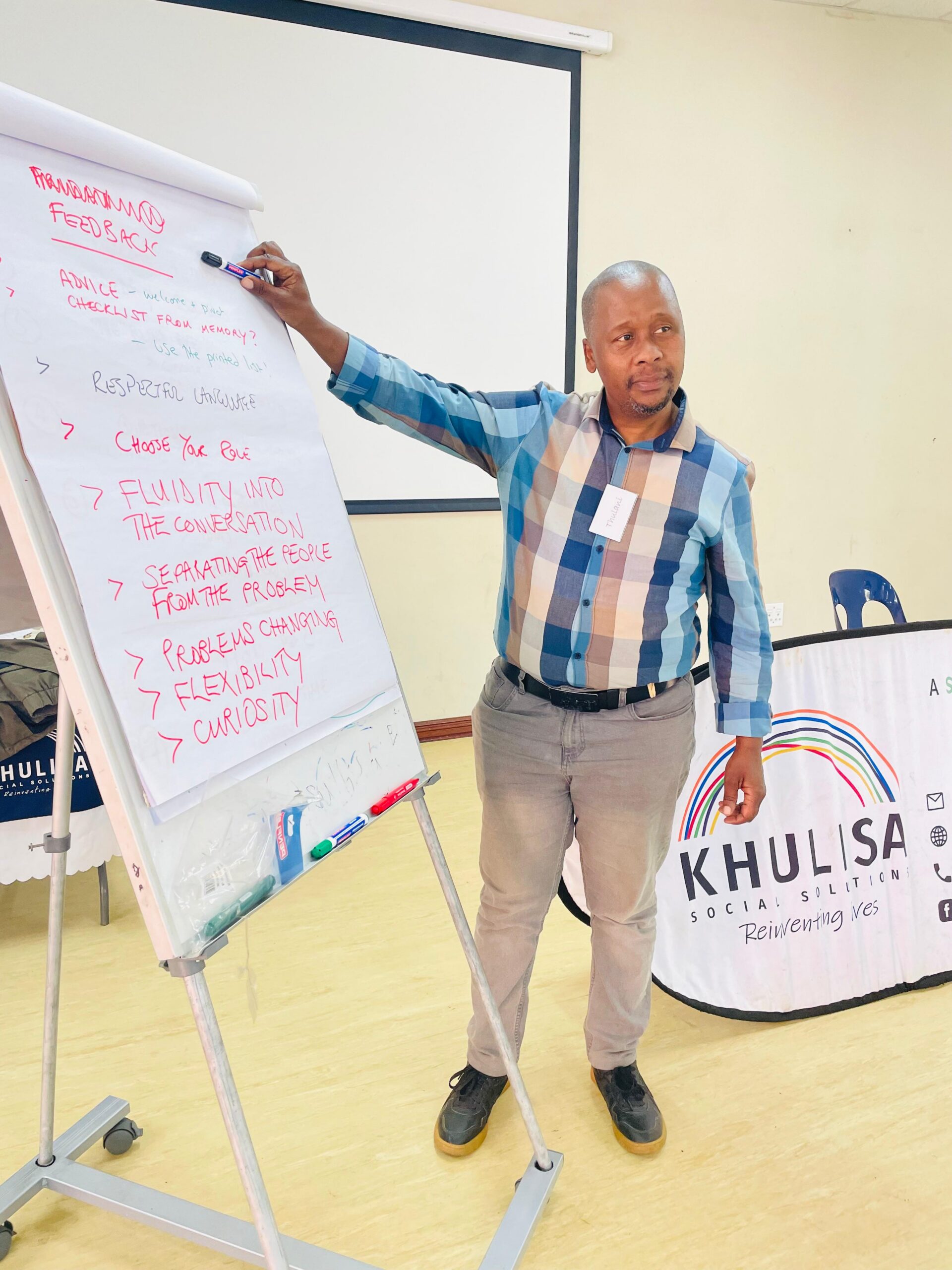
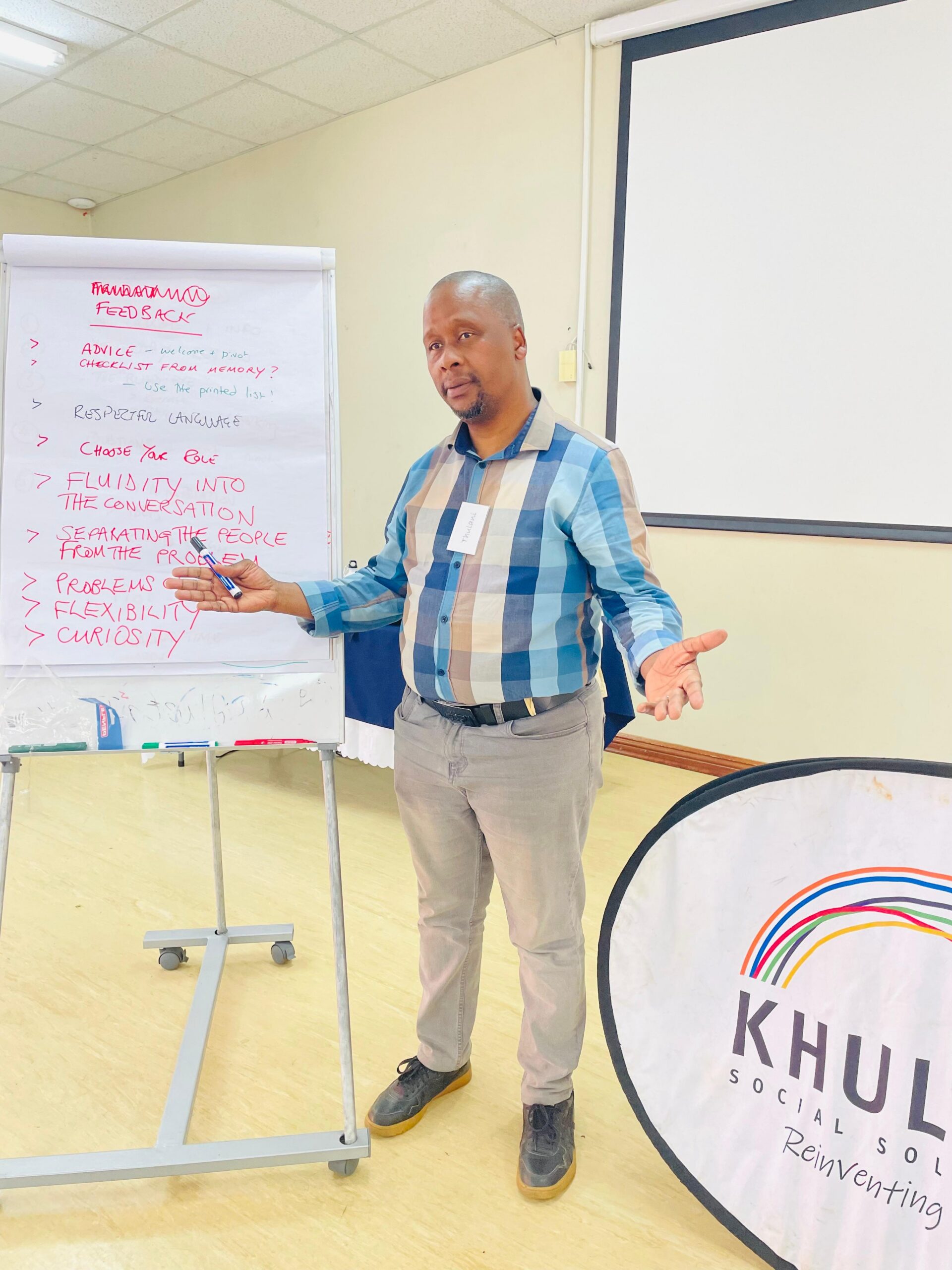
The programme was deliberately designed to go beyond one-off training. Over 12 months, organisations progressed through organisational assessments, governance and board development, financial management, strategic planning, safeguarding, monitoring and evaluation, fundraising, programme management and grant writing, with mentoring, coaching and technical assistance.
The organisational changes reported by participants illustrate what these statistics mean in practice. One organisation reported moving from struggling with basic governance and financial systems to having a functional board, proper financial controls and a strategic plan guiding its work. Another reported that improved financial management capability enabled it to produce proper financial reports, manage budgets more effectively and demonstrate accountability to prospective funders.
Lesley Ann van Selm, Founder and Managing Director of Khulisa Social Solutions, said the results highlight the need to rethink how NGO capacity strengthening is viewed.
“When we strengthen governance, financial accountability, monitoring and evaluation, fundraising and leadership within a community organisation, we are not simply strengthening an NGO. We are strengthening a part of the social infrastructure through which communities respond to unemployment, poverty and exclusion.”
She said South Africa’s unemployment crisis makes this particularly urgent.
“We cannot continue to respond to complex social and economic challenges with fragmented, short-term interventions. Local organisations understand the lived realities of the communities in which they work, but they need strong governance, credible data, financial systems, leadership and the ability to mobilise resources if they are to become sustainable development partners.”
The Eastern Cape initiative also illustrates the potentially important role that renewable-energy community trusts can play in building sustainable local development ecosystems. Rather than funding only stand-alone projects, investment in the capacity of existing community organisations can leave behind stronger local institutions that can attract additional resources, account for funding, demonstrate impact, and continue serving communities beyond an individual funding cycle.
For Khulisa, the Eastern Cape results demonstrate why organisational development should be treated as an investment rather than an administrative cost. When a community organisation becomes more accountable, more financially capable, better able to measure its results, and more successful at mobilising funding, the benefits extend beyond the organisation to the people and communities it serves.
At a time when South Africa is grappling with unemployment on an extraordinary scale, particularly among young people, investing in strong, locally rooted civil-society organisations should form part of the country’s broader response.
Strong communities require strong local institutions, and sustainable development depends on ensuring those institutions have the capacity to remain active long after an individual project or funding cycle has ended.
About us
Khulisa Social Solutions is a South African social cohesion and community development organisation founded in 1997. The organisation works nationally to strengthen vulnerable communities through restorative practices, NGO capacity-building, dialogue processes, youth development, psychosocial support, skills development, and collaborative ecosystem partnerships. Khulisa’s work focuses on addressing the systemic root causes of social dysfunction by building stronger relationships among communities, government, civil society, and the private sector.
For more information, contact:
Lesley Ann van Selm | Managing Director and Founder
Khulisa Social Solutions
082 601 2299