
MEDIA RELEASE
COMMUNITY VOICES SHAPE FUTURE OF SUSTAINABLE WATER INNOVATION IN SOUTH AFRICA
Benoni, Gauteng – 17 June 2026:
FOR IMMEDIATE RELEASE
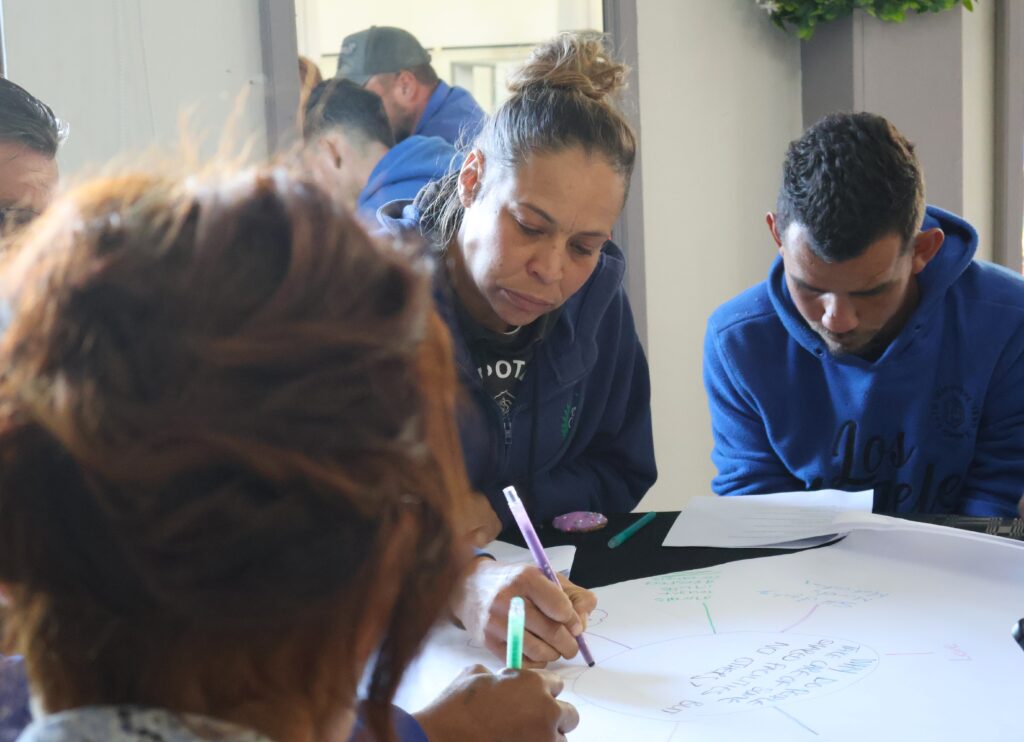
A pioneering wastewater treatment research initiative being implemented at Manger Care Centre in Benoni has demonstrated the critical role that community participation plays in the success of environmental innovation.
The Low-Tech Water Project, a collaboration between Zurich University of Applied Sciences (ZHAW), Stellenbosch University (SUN), and Manger Care Centre (MCC), aims to develop and refine low-tech treatment technologies for on-site treatment and reuse of source-separated wastewater. Designed for resource-constrained and off-grid environments, the innovation seeks to improve water security, support environmental sustainability, strengthen climate resilience, and recover valuable resources from wastewater. The pilot system is being implemented at MCC, which runs a reintegration programme for homeless individuals.
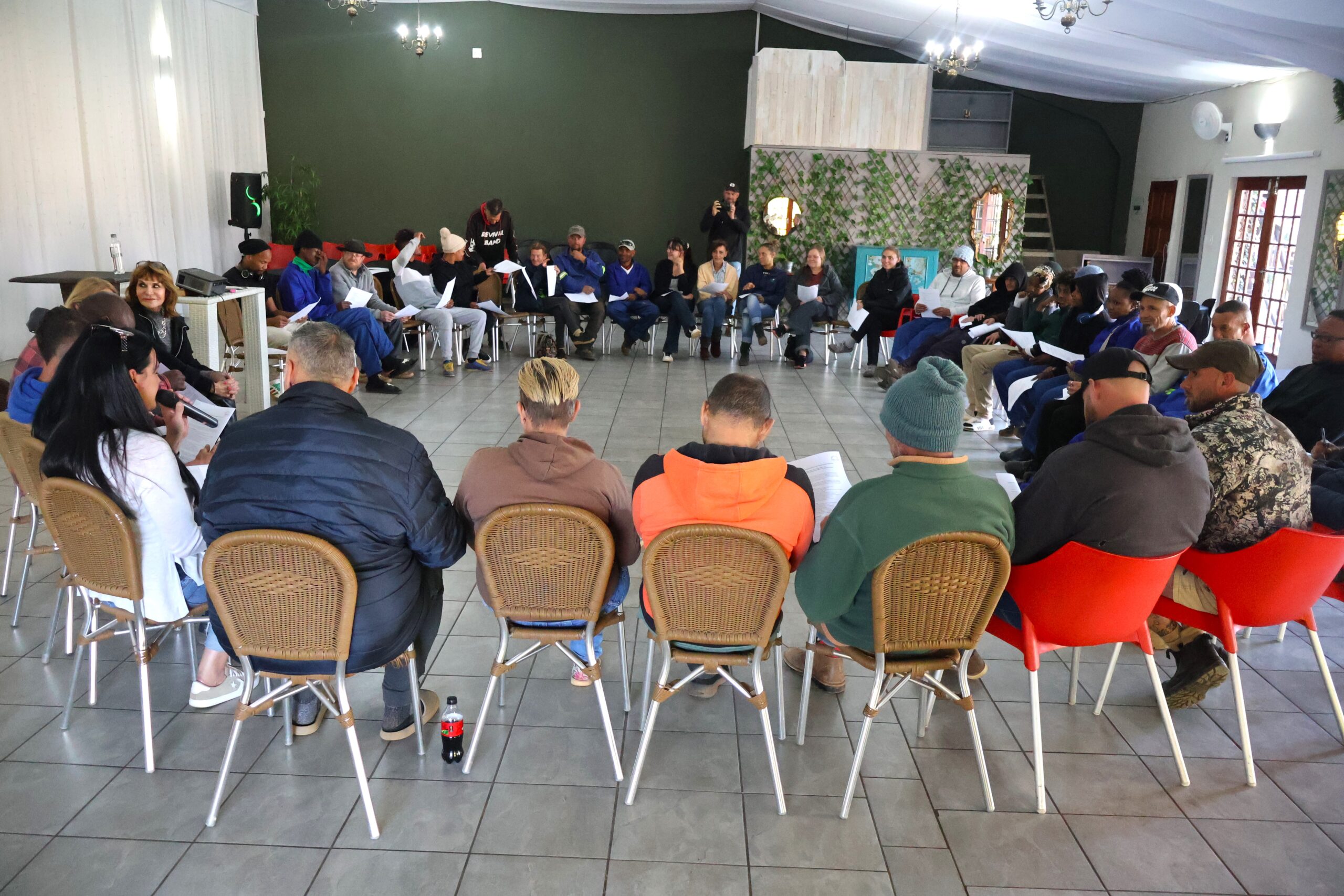
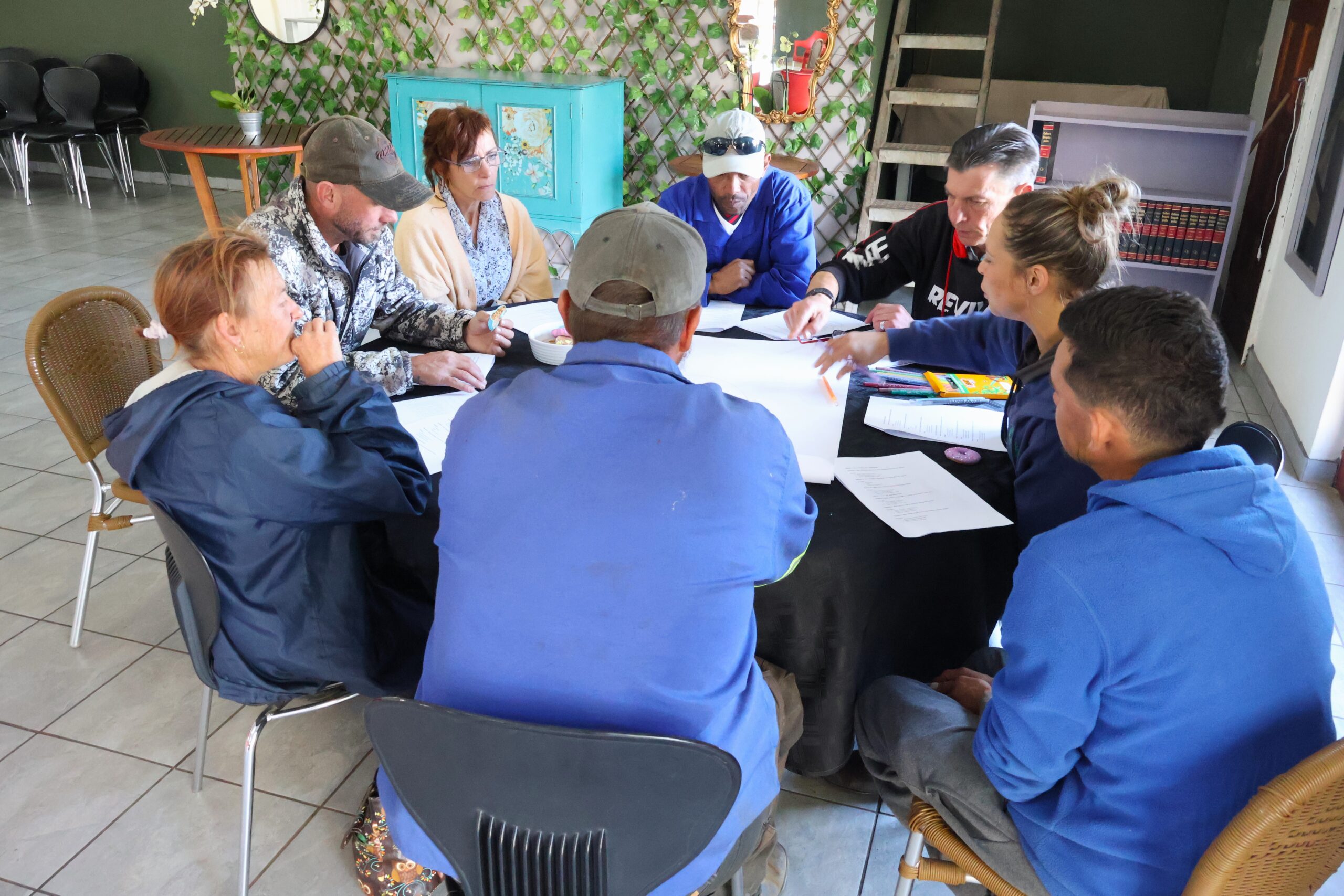
Recognising that technological solutions alone cannot guarantee long-term success, the project partners commissioned Khulisa Social Solutions to undertake a comprehensive participatory baseline assessment using its Systemic Intuitive Thinking (SIT) Dialogue Circle methodology.
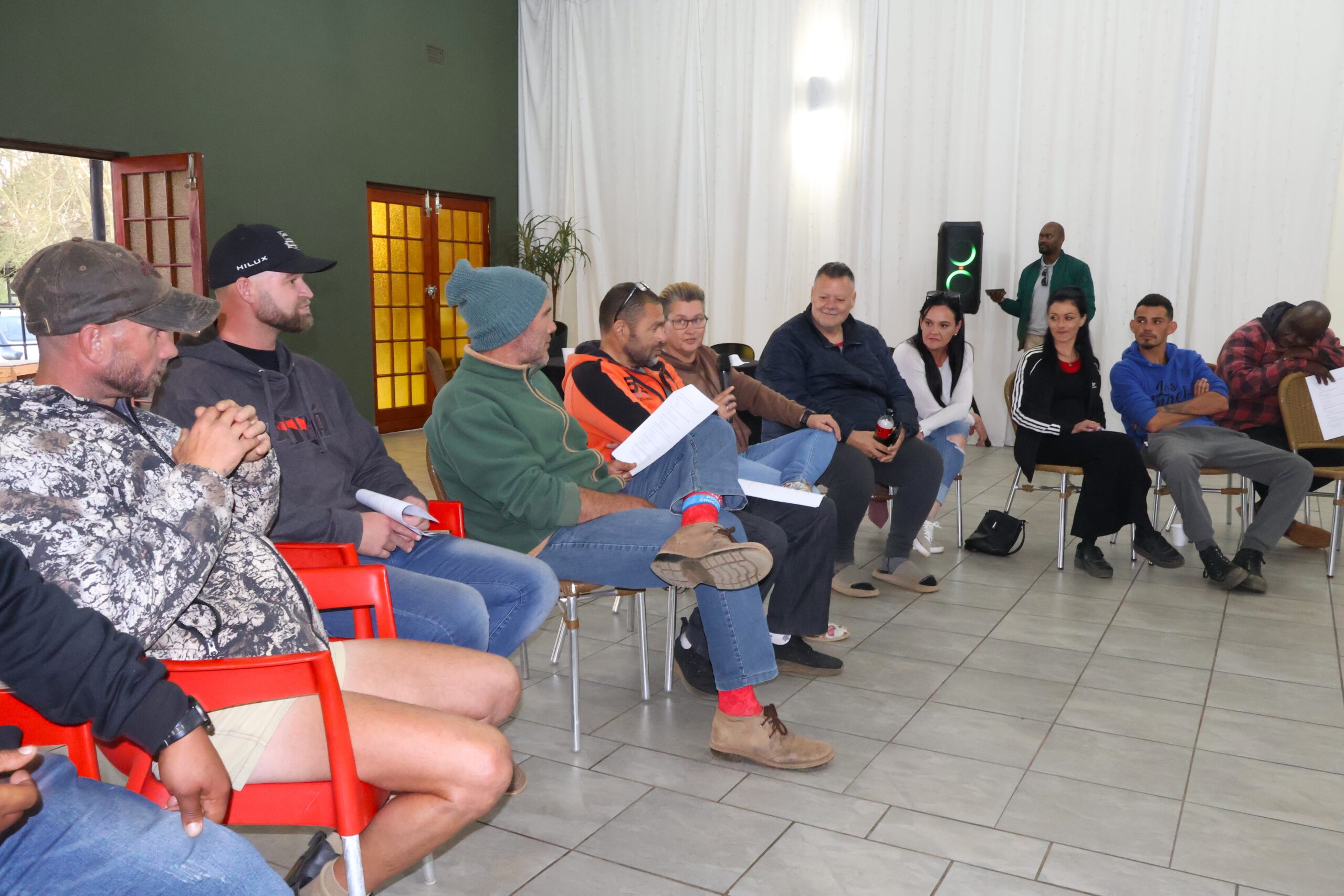
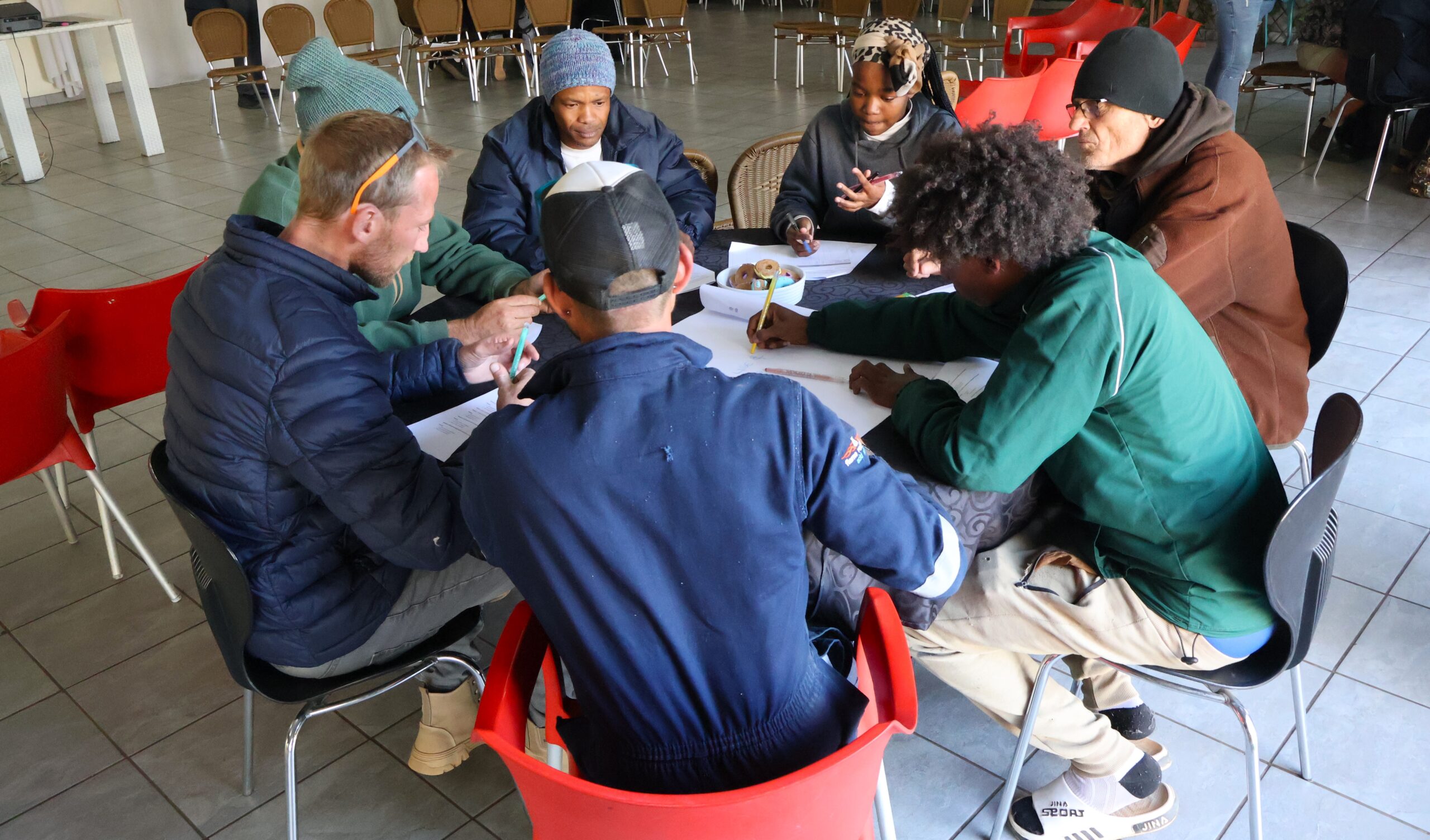
The assessment brought together approximately 35 residents, beneficiaries, and staff members of MCC to explore the social, behavioural, and community factors that may influence the successful implementation and sustainability of the pilot system.
The findings revealed overwhelming support for the project, with participants expressing confidence in the technology and enthusiasm about its potential environmental and social benefits. An independent evaluation completed by 33 participants recorded an overall satisfaction rating of 97.3%, reflecting exceptionally positive levels of engagement and support for both the project and the participatory process.
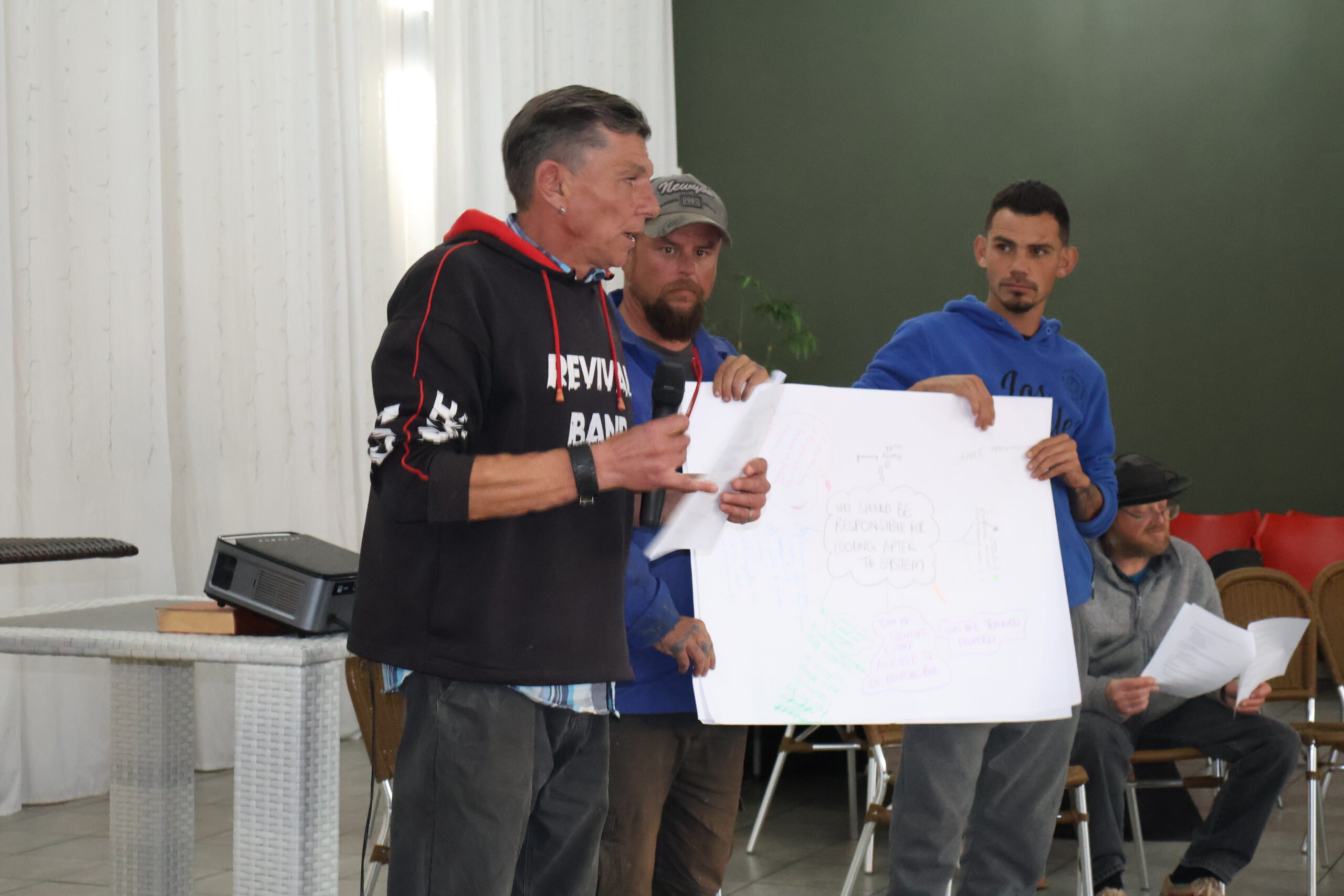
Across the dialogue discussions, participant reflections, visual group presentations, and evaluation findings, several key themes consistently emerged:
- Trust and transparency are essential for community confidence.
• Clear and ongoing communication is critical to participation.
• Sustainability depends on shared ownership and responsibility.
• Training and capacity building are necessary for effective use and maintenance.
• Leadership and collaboration are fundamental to long-term success.
One of the most significant findings was that participants consistently viewed social and behavioural factors as more important to sustainability than the technology itself. Participants identified communication failures, lack of accountability, insufficient ownership, and poor stakeholder engagement as greater risks than technical system failures.
Long-term success will depend not only on the quality of the technology but also on the strength of relationships, trust, participation, and collective stewardship surrounding the project.
The assessment also demonstrated the value of Khulisa Social Solutions’ Systemic Intuitive Thinking methodology as a tool for integrating community knowledge into scientific research. Beyond generating valuable baseline data, the dialogue process strengthened social cohesion, encouraged stakeholder ownership, and created opportunities for collaborative problem-solving.
Speaking on the significance of the findings, Khulisa Social Solutions noted that the project offers an important example of how scientific innovation can be strengthened through meaningful community engagement.
“Communities are not merely beneficiaries of innovation; they are critical partners in shaping its success. The findings demonstrate that sustainable environmental solutions require both technical excellence and strong social foundations.”
The participatory baseline assessment now provides a robust benchmark against which future project outcomes can be measured, while offering practical guidance to strengthen implementation, stakeholder engagement, and long-term sustainability.
Photographs and additional project information will be released separately.
ABOUT THE PROJECT
The Low-Tech Water Project is a collaborative research initiative between Zurich University of Applied Sciences (ZHAW), Stellenbosch University (SUN), and Manger Care Centre (MCC). The project develops and tests biofilter-based low-tech technologies for the treatment and reuse of source-separated wastewater, including greywater and blackwater. The targeted and resource-efficient treatment allows greywater to be reused for non-potable applications such as toilet flushing, irrigation, and laundry. Such systems can operate fully water and energy self-sufficient in off-grid settings. This contributes to SDG 6, Clean Water and Sanitation for All, while promoting environmental sustainability and economic value creation.
About us
Khulisa Social Solutions is a South African social cohesion and community development organisation founded in 1997. The organisation works nationally to strengthen vulnerable communities through restorative practices, NGO capacity-building, dialogue processes, youth development, psychosocial support, skills development, and collaborative ecosystem partnerships. Khulisa’s work focuses on addressing the systemic root causes of social dysfunction by building stronger relationships among communities, government, civil society, and the private sector.
For more information, contact:
Lesley Ann van Selm | Managing Director and Founder
Khulisa Social Solutions
082 601 2299

